

Quinn Emanuel Celebrates 10 YEARS IN MAINLAND CHINA 昆鹰庆祝中国大陆办公室成立十周年
Our China Team on the Past Decade – and the Next
昆鹰中国团队:十年回望,再启新程
Quinn Emanuel is celebrating a decade in mainland China, not as a ceremonial nod but as a mark of our dedication to fighting – and winning – for our clients. Below, Global Co-Managing Partners Mike Carlinsky and Bill Burck join our China partners to talk about the dynamic global rise of Chinese companies and their urgent need for world-class representation in their legal disputes – a need that Quinn Emanuel has met, and embraced, over the past 10 years. The team talks about the next decade, too.
昆鹰庆祝中国大陆代表处成立十周年。这不仅是一次象征性的纪念,更彰显了我们始终致力于为客户全力奋战、赢得胜利的决心。在下方视频中,昆鹰全球联席管理合伙人Mike Carlinsky和Bill Burck与中国团队合伙人共同探讨了中国企业在全球市场的迅速崛起,以及随之而来的对世界一流争议解决法律服务的迫切需求。过去十年来,昆鹰始终积极回应并切实满足了这一需求。视频中,昆鹰团队还展望了未来十年的发展。
The bottom line: Chinese clients need the best trial lawyers in the world, who also understand Chinese business culture and sensitivities, and Quinn Emanuel is the bridge between those business realities and the international legal system.
一言以蔽之,中国客户需要的律师既要自身是世界顶尖的庭审律师,同时还必须深刻理解中国的商业文化及其特有的实际情况。昆鹰正是连接中国企业的商业现实与国际法律体系的桥梁。
As Chinese companies have expanded across international markets in the past 10 years, cross-border disputes have become more common and more complex. Drawing on a decade of litigation and arbitration work from Quinn Emanuel’s offices in Beijing, Shanghai, and Hong Kong SAR, we’ve identified five critical shifts that are reshaping cross-border litigation. We think Chinese companies and their advisers should incorporate these game-changing shifts in their international dispute planning, and we invite you to consider the executive summary below.
过去十年间,随着中国企业不断走向世界,跨境争议也日益频繁、愈加复杂。基于昆鹰北京、上海和香港特别行政区代表处十年来的诉讼与仲裁实践,我们总结出重塑中国企业跨境诉讼的五大关键趋势。我们认为,中国企业及其律师在规划国际争议应对策略时,应将这些重大趋势纳入考量。欢迎阅读以下摘要。

Five Shifts Reshaping Cross-Border Litigation for Chinese Corporates
重塑中国企业跨境诉讼的五大趋势
Below are links to the whitepaper | 点击下方链接查看白皮书
ENGLISH | CHINESE
1. Securities Litigation Is Absorbing Geopolitical Risk
证券诉讼日益反映地缘政治风险
Disclosure obligations for China-linked issuers are converging with geopolitics in the courtroom. In August 2026, an NYSE-listed Chinese technology company was hit with a U.S. securities class action alleging it misled investors about both its artificial intelligence activities and the risk that a U.S. Department of Defense “Chinese military company” designation posed to its share price. This sits atop a longer-running wave of litigation from Holding Foreign Companies Accountable Act delistings and variable interest entity disputes, which has already produced appraisal proceedings and shareholder suits arising from take-private transactions. Quinn Emanuel partners have won dismissal of U.S. securities class actions for Chinese companies and defended Chinese state-owned banks against a $130 million sanctions-related motion. We have exactly the transnational expertise and securities law experience this litigation category now demands, reflecting how geopolitical scrutiny, Chinese companies’ global operations, and stakeholder engagement are becoming increasingly intertwined in such cases. Companies anticipating a sensitive disclosure are increasingly engaging litigation counsel beforehand to pressure-test it, rather than waiting to respond to a plaintiffs’ firm after the fact.
在诉讼中,与中国相关的在美上市企业的信息披露义务正越来越多地与地缘政治因素相互交汇。2026年8月,一家在纽约证券交易所上市的中国科技公司在美国遭遇证券集体诉讼,原告指控其在两方面误导投资者:一是公司的人工智能相关活动,二是美国国防部将其列入“中国军事企业”清单(“Chinese military company”)可能对其股价造成的风险。本案是一轮更长期诉讼趋势的一部分:《外国公司问责法》(Holding Foreign Companies Accountable Act)引发的退市及可变利益实体(VIE)相关争议,催生了因私有化交易而产生的估值诉讼和股东诉讼。昆鹰合伙人曾代表多家中国企业驳回数起美国证券集体诉讼,也曾代表中国国有银行成功抗辩一项案涉金额高达1.3亿美元的制裁相关动议。此类诉讼如今所需要的正是昆鹰所具备的跨国专业能力和证券法经验;这一趋势也反映出在此类案件中,地缘政治审查、中国企业的全球业务以及利益相关方沟通正日益紧密地交织在一起。对于可能作出的涉及敏感事项的信息披露,越来越多的企业会在披露前即聘请诉讼律师对相关内容进行“压力测试”,而不是等到原告律师事务所提起诉讼之后再作回应。
2. Sanctions Disputes Are Increasingly Being Litigated in Court
制裁争议越来越多地诉诸法院
Sanctions exposure is no longer confined to regulatory designations; it is generating court cases on both sides of the Pacific.
China’s Anti-Foreign Sanctions Law creates a private right of action allowing Chinese parties to sue in PRC courts for damages caused by a counterparty's compliance with foreign sanctions, and Chinese courts have already acted. In 2025, a court ruled against a Singaporean shipping firm that refused to deliver goods to a Hong Kong SAR manufacturer on the U.S. sanctioned entity list, and China’s Supreme People’s Court has since flagged the case as a model for future rulings.
On the U.S. side, sanctions designations are increasingly the subject of contested litigation rather than agency proceedings, as in the $130 million sanctions-related motion Quinn Emanuel defeated on behalf of Chinese state-owned banks.
Counterparties who once treated sanctions as a compliance question now need litigation counsel on both fronts, and companies that have been designated, or fear being designated, increasingly have real options to challenge such a listing rather than simply absorb it.
制裁风险已不再局限于监管层面的制裁认定,同时也正在中美两地催生法院诉讼。
中国《反外国制裁法》为中国主体设立民事诉权,使其可以就交易相对方因遵守外国制裁而造成的损失向中国法院提起诉讼,中国法院也已经开始实际适用这一制度。2025年,一家新加坡航运企业因拒绝向一家被列入美国制裁实体名单的香港特别行政区制造企业交付货物,被中国法院判决承担责任;此后,中国最高人民法院又将该案列为未来类似案件裁判的典型案例。
在美国,围绕制裁认定本身的争议也越来越多地通过对抗性诉讼,而不是仅通过行政程序解决。昆鹰此前代表中国国有银行击退涉案金额高达1.3亿美元的制裁相关动议即为一例。
因此,过去仅将制裁视为合规问题的交易相对方,如今也日益需要在中美两地同时寻求诉讼律师的支持;而已被列入制裁名单或担心被列名的企业,也越来越有切实可行的途径对列名提出挑战,而不再只能被动承受其后果。
3. Chinese Companies Are Increasingly Becoming the Hunters on IP
中国企业在知识产权领域攻势渐强
A More Proactive Role in Global IP Enforcement
Chinese companies are now involved in over 1,200 new U.S. intellectual property lawsuits a year, and a growing share involve Chinese companies affirmatively bringing trademark suits as they expand globally, rather than defending against infringement claims.
Quinn Emanuel’s own litigation win for a Chinese life sciences company in a patent dispute against a dominant U.S. competitor illustrates the trend directly: a federal jury awarded over $300 million for willful infringement, the largest such award for a Chinese company.
At the same time, the mechanics of pursuing or defending these suits are shifting under litigants’ feet. A 2026 U.S. appellate ruling on the Hague Service Convention has complicated the Schedule A model that plaintiffs have relied on to serve Chinese defendants quickly – a development that cuts both ways, depending on whether the Chinese company is plaintiff or defendant.
A Parallel Rise in Trade Secret Exposure
Trade-secret disputes are becoming a significant risk for Chinese companies expanding internationally, particularly when they recruit scientists, engineers, or executives from competitors. What begins as an employee-mobility dispute can threaten a core product or research program, financing, and senior management—and in some cases can trigger both civil litigation and a parallel U.S. government investigation.
Quinn Emanuel has substantial experience in these matters. We defended a major Chinese company in a long-running U.S. criminal trade-secret case that ultimately ended with dismissal of all remaining charges with prejudice. We have also represented Chinese and China-connected life-sciences companies and founders in major trade-secret disputes with multinational pharmaceutical companies, including matters that reached favorable commercial resolutions.
The exposure is not limited to U.S. district courts. The U.S. International Trade Commission has become an important forum for trade-secret claims, and Section 337 can reach misappropriation occurring outside the United States where resulting products are later imported into the U.S.
The key defense is often to distinguish legitimate employee knowledge and experience from protected confidential information, while proving how the company's technology was independently developed. Companies can strengthen that defense before litigation by reviewing prior employee obligations, prohibiting transfer of former-employer materials, maintaining clear development records, and implementing sensible access controls. Once a dispute begins, civil and potential government exposure should be assessed together, while protecting the company's own technology during discovery.
中国企业在全球知识产权维权中扮演更加主动的角色
如今,美国每年新立案的知识产权诉讼中,涉及中国企业的已超过1,200宗,其中越来越多的案件是由不断拓展全球业务的中国企业主动提起的诉讼,而不再只是中国企业作为侵权诉讼的被告。
昆鹰曾代表一家中国生命科学企业,在专利诉讼中对抗一家大型美国竞争对手并取得胜利,这一案件正直接体现了上述趋势:联邦陪审团就故意侵权判赔逾3亿美元,创下中国企业在此类案件中获得的最高赔偿金额。
与此同时,无论是提起还是应对这些诉讼,其程序机制本身也正在迅速发生变化。2026年,美国一家上诉法院就《海牙送达公约》作出裁决,使原告一直借以快速向中国被告完成送达的“Schedule A”批量诉讼模式变得更加复杂。这一变化是一把 双刃剑,其利弊具体取决于企业在案件中是原告还是被告。
商业秘密风险同步上升
商业秘密争议正日益成为中国企业国际化进程中的重大风险,尤其体现在企业从竞争对手处招聘科学家、工程师或高级管理人员时。原本看似只是一起人才流动纠纷的争议,可能迅速波及企业的核心产品或研发项目、融资以及高级管理层;在某些情况下,还可能同时引发民事诉讼和美国政府的平行调查。
昆鹰在处理此类案件方面拥有丰富经验。我们曾代表一家大型中国国企应对一起历时多年的美国商业秘密刑事案件,最终美国政府永久撤销全部指控,不得再次起诉。我们也曾代表诸多中国及与中国相关的生命科学企业和创始人,在与跨国制药企业之间的重大商业秘密争议中进行抗辩,很多案件最终达成了有利的商业和解。
相关风险并不局限于美国联邦地区法院。美国国际贸易委员会(ITC)已经成为审理商业秘密争议的重要平台;且对于发生在美国境外的商业秘密侵占行为,由此产生的产品其后被进口至美国,亦可适用《关税法》第337条。
此类案件的关键抗辩往往在于区分员工可以合法使用的一般知识和经验与受法律保护的保密信息,同时证明公司的技术是如何独立研发而成的。企业可以在诉讼发生前即强化这一抗辩基础,例如审查新员工对前雇主承担的义务、禁止其转移前雇主的资料、保存清晰的研发记录,以及实施合理的访问权限控制。一旦争议发生,则应统筹评估民事诉讼与潜在的政府执法风险,同时在证据开示过程中保护企业自身的技术。
4. Cross-Border Procedure Can Determine Outcomes
跨境程序问题可能直接决定案件结果
Jurisdiction, service, and discovery — these are the key procedural issues on which cross-border cases involving Chinese parties may be won or lost. In a recent victory for a Chinese state-owned entity, Quinn Emanuel fought service of process in a criminal case for six years. Litigation strategy in cross-border disputes now must be built around procedure, not just merits.
One increasingly consequential tool is Section 1782 of Title 28 of the U.S. federal code, which allows a court in the United States to order a person or company located in the U.S. to produce documents or give testimony for use in a lawsuit or arbitration that is pending, or even reasonably contemplated, in another country. Beyond the Hague Service Convention ruling noted above, U.S. courts are actively reshaping this statute. A January 2026 Second Circuit ruling significantly narrowed the availability of that discovery for litigants based outside the U.S., while other circuits continue to diverge on whether a discovery target must be subject to personal jurisdiction where the application is filed. For Chinese litigants and their counterparties alike, the rules governing Section 1782 are being rewritten in real time.
在涉及中国当事人的跨境案件中,管辖权、送达和证据开示等关键程序问题经常直接决定案件的成败。
在昆鹰近期为一家中国央企取得的胜利中,我们就该刑事案件的送达问题坚持抗辩长达六年。如今,跨境争议的诉讼策略不能只着眼于案件实体,还必须同时围绕程序问题进行构建。
其中一项影响越发显著的程序工具是《美国法典》第28编第1782条(Section 1782)。根据该条款,美国法院可以命令位于美国境内的个人或企业,为另一国家正在进行、甚或合理预期将要进行的诉讼程序提供文件或证言。除上文提及的《海牙送达公约》相关裁决外,美国法院也正在积极重塑Section 1782的适用规则。2026年1月,美国联邦第二巡回上诉法院作出一项判决,大幅限制了美国境外诉讼当事人使用这一取证机制的范围;与此同时,对于受理Section 1782申请的法院是否必须对被申请取证的对象有属人管辖权,各联邦巡回法院之间仍存在分歧。
对中国诉讼当事人及其对方当事人而言,相关规则都仍在不断变化之中。
5. Chinese Companies Are Increasingly Turning to Arbitration
中国企业越来越多地选择仲裁
A quieter but equally significant shift is well underway as Chinese companies, including state-owned enterprises, steer a growing share of their cross-border disputes toward arbitration rather than litigation. Survey data on Chinese companies' dispute process choices suggests that the unpredictability and complexity of foreign court procedure, not just enforcement concerns, are a key driver. Arbitration’s more limited disclosure regime is a major part of the appeal. Unlike U.S.-style discovery, most arbitral rules permit only tailored, document-based disclosure, often with no depositions and no live testimony. China’s own revised Arbitration Law, effective March 2026, reinforces the trend at home by giving parties to foreign-related disputes autonomy over the seat and administering institution for the first time. Listed companies and state-owned enterprises are already channeling a rising share of M&A and cross-border disputes into arbitration as a result.
Arbitrations start not when the dispute arises but at the time when the clause itself is drafted. The language in which proceedings and the award will be rendered shapes the pool of available arbitrators and, in turn, the composition of the tribunal. Hong Kong SAR has become an important seat for Chinese outbound investment in this environment – the Beijing Arbitration Commission opened an office there in November 2025 specifically to support outbound investment by PRC companies, and Quinn Emanuel partners have significant positions at the Hong Kong International Arbitration Centre. Singapore has grown in parallel as a seat of choice for many of the same clients, reinforced by new institutional presence such as a planned Singapore office for the International Centre for Settlement of Investment Disputes, or ICSID. For Chinese companies, the practical task is drafting arbitration clauses – seat, language, and tribunal composition alike – with the same rigor once reserved for the substance of the deal itself.
另一个同样重要的变化正在悄然发生:包括国有企业在内的中国企业正将越来越多的跨境争议交给仲裁,而非诉讼。
有关中国企业争议解决程序选择的调查数据显示,推动这一趋势的重要原因并不仅仅是执行方面的考虑,也包括外国法院程序本身的复杂与不可预测性。仲裁较为有限的证据披露机制也是吸引企业的重要因素之一。与美国式的证据开示不同,多数仲裁规则仅允许有针对性的、以文件为基础的披露,通常不设庭外证言取证(deposition)或证人现场作证。中国新修订的《仲裁法》于2026年3月施行,首次明确涉外争议当事人自主选择仲裁地和仲裁机构的权利,也进一步强化了国内这一趋势。受此推动,上市公司和国有企业已开始将越来越多的并购及跨境争议交由仲裁解决。
仲裁并非始于争议发生之时,而是始于起草仲裁条款的一刻。仲裁程序及裁决使用何种语言,会影响可供选择的仲裁员范围,进而影响仲裁庭的组成。在此背景下,香港特别行政区已成为中国企业对外投资相关争议的重要仲裁地。2025年11月,北京仲裁委员会专门在香港设立办公室,以支持中国企业开展境外投资。昆鹰多位合伙人也在香港国际仲裁中心(HKIAC)担任重要职务。与此同时,新加坡也逐渐成为许多类似客户所青睐的仲裁地;国际投资争端解决中心(ICSID)计划在新加坡设立办公室等新的国际仲裁机构布局进一步强化了这一趋势。
因此,中国企业要做的是像过去审慎对待交易实体条款一样,以同样严谨的方式起草仲裁条款,包括仲裁地、程序语言以及仲裁庭组成等各个方面。
Below are links to the whitepaper | 点击下方链接查看白皮书
ENGLISH | CHINESE
Quinn Emanuel Global Co-Managing Partner Michael B. Carlinsky Makes First Visit to Mainland China, with Many More to Come
昆鹰全球联席管理合伙人Michael B. Carlinsky首访中国大陆,期待常往常来
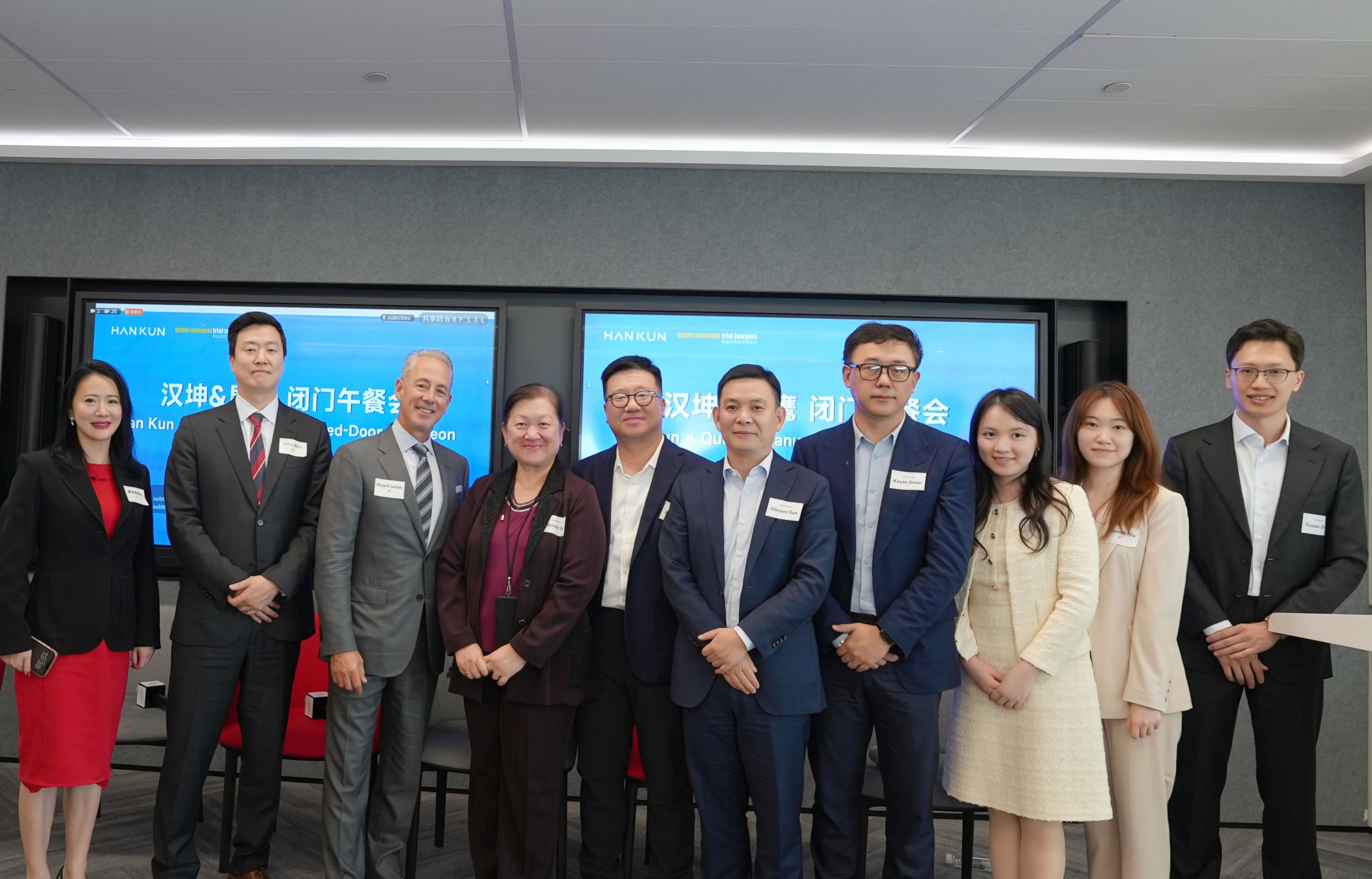
As Quinn Emanuel celebrates its tenth anniversary in mainland China, Michael B. Carlinsky, the firm’s Global Co-Managing Partner, visited mainland China from October 13 to 16, 2026. Coming at this significant milestone, the visit underscores the firm’s commitment to the Chinese market and to serving a growing community of clients from this region.
2026年,美国昆鹰律师事务所(Quinn Emanuel Urquhart & Sullivan, LLP)迎来中国大陆代表处成立十周年。值此里程碑时刻,昆鹰全球联席管理合伙人 Michael B. Carlinsky 于10月13日至16日首次到访中国大陆。此次访问既是对昆鹰中国业务十年发展历程的回顾,也彰显了昆鹰持续深耕中国市场、服务不断壮大的中国客户群体的坚定承诺。
Read about and see photos from Mr. Carlinsky’s visit here.
请点击此处阅读Carlinsky先生来访的相关回顾并查看照片:here。

 vCard


